Most couples never get the tools. They just get a wedding.
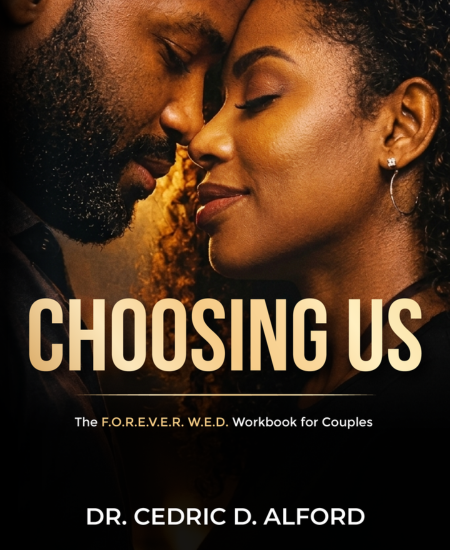
Choosing Us is a ten-week guided experience built around ten principles that make marriages last — grounded in research, anchored in Scripture, and designed for two people willing to do the real work together.
What You and Your Partner Will Build Together

A Shared Language
Ten principles. Ten weeks. You and your partner will leave with language for conversations most couples never know how to start.
Research and Scripture
Grounded in the work of Gottman, Johnson, and Karney — and anchored throughout in biblical wisdom that has stood the test of time.
Structured for Real Life
Each week is built around a focused Power Hour — sixty minutes of honest conversation, applied practice, and genuine connection.
Built to Last
Three milestone checkpoints give couples space to assess, reflect, and recommit — not just complete a workbook, but build a marriage.
Ten Principles. Ten Weeks. One Marriage.
Marriages that last are not rigid — they bend. Week one invites couples to examine where they resist, where they over-give, and how to find the middle ground that holds a partnership together through seasons of change.
Communication is not just talking more — it is talking honestly and listening actively. Week two builds the skill of saying hard things with care and hearing difficult things without shutting down.
Contempt — not conflict — is what kills marriages. Week three builds the daily discipline of honoring your partner's worth even when you are frustrated, disappointed, or simply tired.
Empathy means understanding from the inside — not just acknowledging your partner's feelings, but genuinely entering them. Week four trains couples to listen to understand rather than listen to respond.
Intimacy cannot exist without risk. Week five creates the conditions where both partners can show up without armor — and experience the kind of closeness that only honesty makes possible.
Strong marriages produce stronger individuals. Week six explores how to build a partnership where both people grow — where your success as a couple lifts each of you higher, not lower.
Every marriage faces seasons that test everything. Week seven builds the capacity to repair after rupture, recover after loss, and recommit when staying feels harder than leaving.
You cannot pour from an empty vessel. Week eight addresses the physical, emotional, and spiritual health of each partner — and how personal wellness directly shapes the health of the relationship.
The ability to name, regulate, and respond to emotion is one of the most critical skills in marriage. Week nine develops the emotional fluency that turns reactive patterns into thoughtful choices.
Love is not a feeling you fall into. It is a decision you make — over and over, especially on the hard days. Week ten seals the commitment with a devotion that is chosen, not just felt.
This Workbook Meets You Where You Are
Engaged Couples
You are about to say "I do." The conversations you have now will shape the patterns of your marriage for years to come. Build the foundation before the pressure arrives.
Newlyweds
The early years bring unexpected adjustments. Navigate those transitions with intention — not just reaction — and establish patterns that will carry you through every season ahead.
Established Couples
Whether you are deepening a good marriage or rebuilding after a difficult season, it is never too late to invest. Stop coasting and start growing — together.
What Every Week Looks Like
Each week is built around one focused session — sixty minutes set apart from the noise of daily life. Phones off. Kids arranged for. Two people fully present.
The Power Hour is not a casual check-in. It is a structured experience with a devotional opening, lesson content grounded in research and Scripture, applied exercises, and a closing moment of prayer together. Every element is designed to move the couple — not just inform them.
Each session includes eight structured activities: a devotional commencement, purposeful pondering, insight exchange, scripture reflection, a bonding exercise, a constructive feedback circle, a gratitude moment, and a closing prayer called Intimate Intercession.
Most couples find that the first session feels unfamiliar. By week three, it becomes something they protect. By week ten, it has become a practice they carry forward long after the workbook is finished. Read the chapter before you come. That fifteen minutes changes the quality of the entire hour.
Running through all ten chapters is one couple's story. Malcolm and Simone are not a perfect example — they are a realistic portrait of two people figuring it out together. Their relationship is not a fairy tale. It is a mirror.
You will watch them navigate each of the ten principles — sometimes getting it right, sometimes struggling in ways you will recognize immediately. Their conflicts are specific. Their growth is earned. The language they find together is the same language the workbook is building in you.
Research on adult learning consistently shows that story transfers principle into practice in a way that instruction alone cannot. Malcolm and Simone make the framework feel less like a concept and more like something that belongs to real people in a real relationship.
Their story is not yours. But you will recognize pieces of yourself in it. That recognition is part of the work.
Most marriage resources do one or the other. This workbook does both — drawing from credible research on what makes marriages thrive and grounding every principle in biblical wisdom that has proven true across centuries.
Gottman's research on the Four Horsemen of relationship deterioration — contempt, criticism, defensiveness, and stonewalling — informs how the workbook approaches Respect and Open Communication. Johnson's Emotionally Focused Therapy shapes the Vulnerability and Empathy chapters. Karney's longitudinal work on what actually sustains marriages across decades grounds the Resilience and Devotion principles.
These are not footnotes dropped in for credibility. They are the structural foundation of each chapter. And alongside every research finding, Scripture speaks to the same truth from a different angle — confirming what God designed long before researchers had the instruments to measure it.
Science and faith do not contradict here. They reinforce each other. That is what makes this workbook different.
Built into the workbook is a reference tool called the Couple's Compass — a one-page summary of all ten principles designed to be returned to again and again throughout the ten weeks and long after the workbook is finished.
For each of the ten principles, the Compass provides four things: the core question to ask each other, the sign that you are living the principle well, the sign that you have drifted from it, and the scripture that anchors it.
For example, for Flexibility: the question is "Are we adapting or resisting?" The sign you are living it is that you compromise without keeping score. The sign you have drifted is that one partner always gives in — or neither does. The anchoring scriptures are Ephesians 4:2 and Philippians 2:4.
Use it at the start of each Power Hour to orient yourselves. Use it when a conversation gets hard. Use it a year from now when you want to check where you are. It is designed to live on your refrigerator long after the workbook sits on the shelf.
The workbook is built around three milestone checkpoints — placed strategically after Chapters 3, 7, and 10 — that give couples structured space to pause, assess honestly, and recommit before pressing deeper.
Milestone 1 — "Are You Ready?" — comes before the ten principles begin. It is a preparation checkpoint. Not every couple who picks up this workbook is ready for the vulnerable conversations that follow. This milestone helps them know.
Milestone 2 — "Looking Back" — arrives after the first four principles. It gives couples a chance to reflect on what has already shifted, name what has been difficult, and decide together whether they are ready to go deeper.
Milestone 3 — "The Deeper Work" — sits at the threshold of the final three principles: Wellness, Emotional Intelligence, and Devotion. These chapters ask the most. The milestone prepares couples to receive them.
These are not tests. They are invitations — to acknowledge the distance traveled, to name what is true, and to choose again, together, to keep going.
Each Partner Needs Their Own Copy
This is not a passive read. Both partners write, reflect, and respond throughout.
Kindle Edition
$9.99
- Instant Download
- Read on Any Device
- Kindle App — Free
- Available on Amazon
Paperback
$24.99
- 218 Pages
- Write-In Workbook Format
- Two-Day Shipping Available
- Available on Amazon
Church Bulk Order
Contact Us
- Orders of 10 or More
- Ideal for your Marriage Ministry
- Pre-Marital Counseling Programs
- Couples Retreats
Dr. Cedric D. Alford

Dr. Cedric D. Alford holds an MBA and a doctorate in organizational leadership. He has spent his career at the intersection of business, academia, and nonprofit work — including a Global Director role at Microsoft and fifteen years teaching graduate-level strategy and leadership.
But the credential that matters most here is this: he has been married to the same woman for nearly thirty years. Neither of them grew up with a model of what a healthy marriage looked like. They built it from scratch — through hard conversations, hard seasons, and the daily decision to keep choosing each other.
Choosing Us is the process behind that marriage — made available to every couple willing to do the work.
Not a Marriage Expert. A Man Who Had to Figure It Out.
The F.O.R.E.V.E.R. W.E.D. framework did not come from a textbook. It came from a life.
A Preacher's Kid
A musician, he grew up in the church — which meant he saw both the ideals of covenant love and the reality of what happens when people do not have the tools to live them out.
Married Almost 30 Years
Not a perfect marriage. A real one. Built from scratch — through hard conversations, hard seasons, and the daily decision to keep choosing each other.
Father of Two
Raising two adult children taught him that the values modeled inside a marriage do not stay inside a marriage. They shape the next generation.
He Has Weathered Seasons
There were moments that could have ended everything. What held was not luck — it was a commitment to repair, to return, and to choose again. That is what this workbook is built on.
A Teacher at Heart
Fifteen years in the graduate classroom — not because he had all the answers, but because he believes deeply that the right framework, clearly taught, changes how people live.
No Blueprint. Just Faith and Work.
He did not write this because he had it figured out from the beginning. He wrote it because he did not — and because he believes every couple deserves access to what he had to learn the hard way.